The 12 Week Plan gives you the structure. But what about that voice in your head that keeps getting in the way?
It’s Monday morning. Your 12 Week Plan is sitting right there on your desk. You know exactly what you’re supposed to do today.
Then you look up, and somehow it’s lunchtime.
You haven’t started. That first line for the week is still blank.
If you’ve ever done this, you’re definitely not alone. I know the feeling because I do it too.
I can sit down on a Sunday night with a fresh notebook, a nice pen, and all the enthusiasm in the world. I’ll make a beautiful plan and feel really good about it.
Monday morning? That’s a whole different story.
And when I finally do get started, I usually do pretty well at first. Then I miss one day. Maybe two.
And before I know it, the notebook is back in the drawer.
I don’t tell anyone. Nobody asks. And quietly, I move on to the next plan.

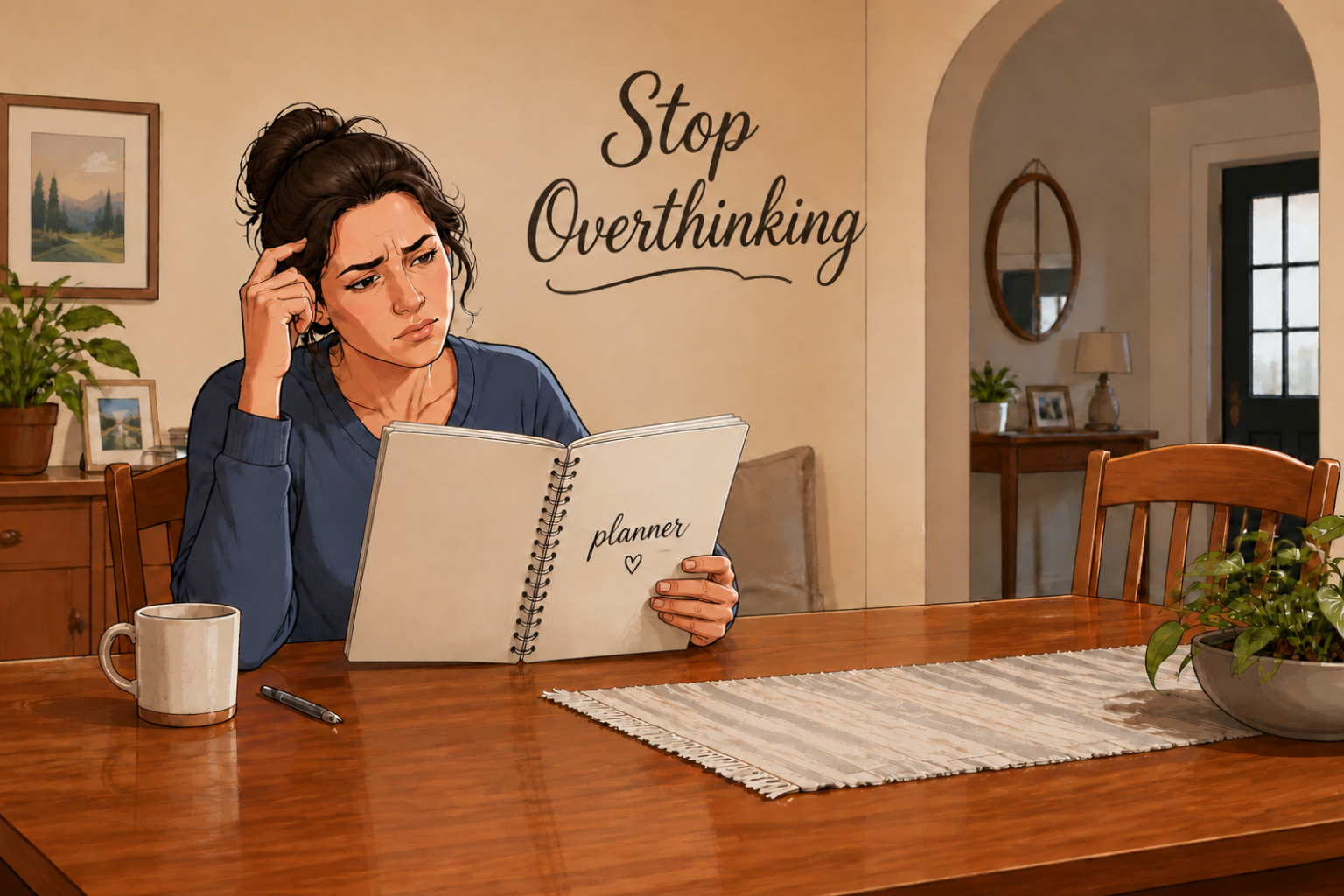
For the longest time, I thought I was just being lazy.
But then I started thinking about it differently.
Lazy people probably aren’t spending their Sunday nights making detailed plans and feeling frustrated when they don’t follow through.
The truth is, I already knew what I wanted to do. I had written it down. I had a plan.
So why wasn't I doing it?
For me, it came down to all the little decisions I kept making before I even started.
Should I do my 30 minutes now or wait until after coffee?
Maybe I should tidy up the plan first.
What if today isn’t the right day?
Maybe I’ll feel more motivated tomorrow.
Sound familiar?
Each little question turns into another conversation in your head. Before you know it, you’ve spent half the morning thinking about doing something instead of doing it.
The frustrating part is that all that thinking feels productive.
But the plan is still sitting there untouched.
And honestly, it’s not that different from lying awake at 3am replaying a conversation. Your mind gets caught in a loop, and you keep feeding it more questions.
The 12 Week Plan already gives you a pretty simple structure:
30 minutes a day, six days a week, and three lines to fill in each week.
That’s manageable. You don’t need to keep reinventing it or deciding what to do every morning.
The plan is doing its job.
But what happens when that little voice starts up again?
That’s the part I’ve been trying to work on myself.
And it’s what led me to Stop Overthinking.

Stop Overthinking is a self-hypnosis audio program by Dr. Steve G. Jones.
You put on your headphones, listen to the recording, and work on developing something called an observer stance.
That sounds a little technical, but the idea is actually pretty simple.
Instead of getting pulled into every thought that pops into your head, you learn to notice it and let it pass without getting caught up in it.
And that’s interesting when you think about those mornings at your desk.
Because the problem often isn’t that you don’t know what to do.
It’s that you spend so much time thinking about whether, when, or how to do it that you never actually get started.
Stop Overthinking also includes a few simple tools you can use throughout the day:
One number and one task each day. So when you sit down in the morning, you already have something specific to focus on.
A deadline for decisions. Because sometimes you just need to make the decision and move on.
One question for everyday choices. A way to stop small decisions from taking up so much of your mental energy.
Five words to use when the overthinking starts. Something simple to help you recognize the loop instead of getting pulled into it.
The recommended approach is to listen once a day for two weeks.
That’s something you could easily fit alongside your existing 30-minute routine.
You don’t have to throw out your plan, start over, or create another complicated system.
You’re simply adding something to help you work on the thinking that keeps getting in the way.
If you’re someone who makes plans, knows what needs to be done, but somehow keeps putting things off, this might be worth a look.
Especially if you find yourself constantly waiting for the right mood, the right time, or the right amount of motivation before getting started.
It’s also a good fit if you’re comfortable listening to an audio program each day and giving the techniques a chance.
But let’s be clear about something.
The audio isn’t going to do your 30 minutes for you.
You still have to sit down and follow your plan.
What it’s designed to help with is that mental back-and-forth that keeps you from getting started in the first place.
And it’s a self-development tool, not medical treatment. If you’re dealing with something that needs professional support, speaking with a qualified healthcare professional is the right step.

Stop Overthinking is $19.95, and it comes with a 30-day money-back guarantee.
So if you give it a try and decide it isn’t for you, you can request a refund under the guarantee terms.
If you want to take a closer look, just tap the button below.
You’ll go straight to Steve’s page, where you can read all the details and decide whether it makes sense for you.
And if you do decide to give it a go, here’s a simple idea:
Listen tonight, before bed.
Then write down tomorrow’s one number and one task.
That way, when you sit down in the morning, you don’t have to spend another 20 minutes deciding what to do.
Your plan is already sitting on your desk.
Maybe it’s time to give that little voice in your head a little less say in what happens next.
Tap the button below to take a look at Stop Overthinking.